From engineering intent to validated reality.
Vanika is building the engineering intelligence layer for physical systems-connecting design, software, hardware, AI, simulation, validation and real-world operation.
Engineering has evolved. Engineering workflows haven’t kept up.
Building an intelligent machine requires more than great mechanical design, powerful software or advanced AI. A modern robot combines mechanical systems, electronics, embedded software, sensors, controls, AI models, simulation environments and deployment infrastructure.
Each discipline has advanced. The workflows connecting them remain fragmented. A design changes and software must adapt. A sensor changes and perception or navigation may require revalidation. A model performs well in simulation, but behavior on the actual machine remains uncertain.
When a deployed system fails, engineers may need to reconstruct which hardware, firmware, calibration and software versions were actually running.
The challenge is no longer simply building individual components. It is engineering the intelligence and behavior of the complete system.
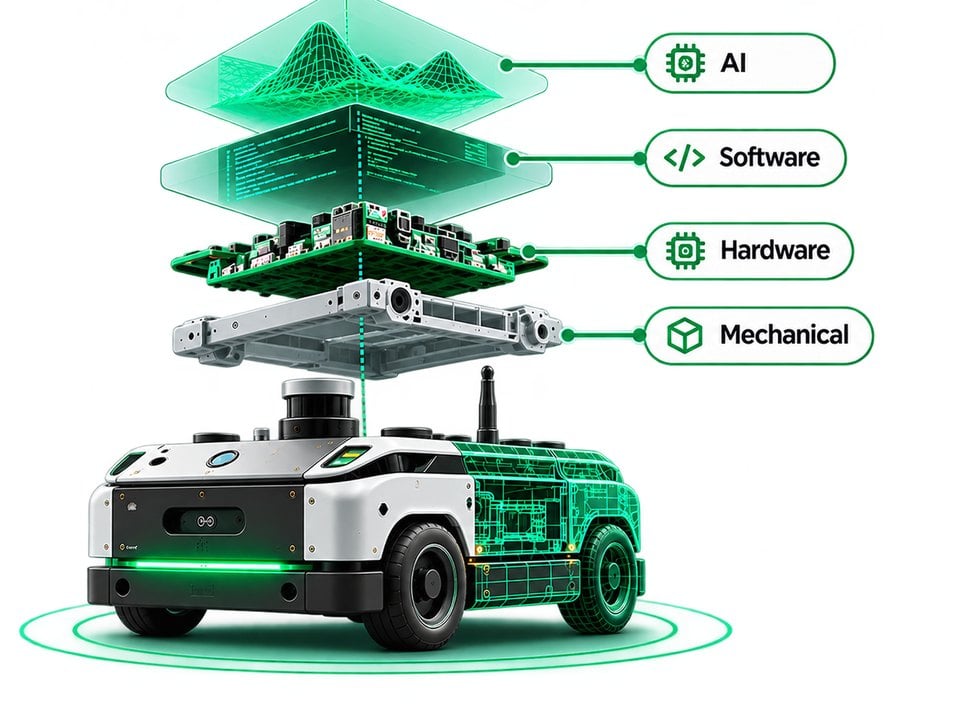
One intelligence layer. Across the engineering lifecycle.
Vanika is an engineering intelligence platform for the physical world. It is designed to understand how physical systems are structured, how their components interact, how engineering decisions affect one another, and how those decisions translate into real-world performance.
Rather than replacing every engineering tool, Vanika aims to connect existing tools and workflows through a common engineering context.
Not just AI that generates an answer. Intelligence that understands the system behind the question.
AI assistants can generate code, explain documentation and automate individual tasks. Physical-system engineering also requires understanding hardware–software relationships, constraints, consequences, verification and continuity as a system evolves.
System-aware engineering
Connect mechanical, electrical, software, control and AI information.
Context-aware intelligence
Reason from the actual system configuration, dependencies and constraints.
Connected workflows
Bring AI-assisted development and engineering tools into a unified experience.
Continuous engineering intelligence
Connect operational observations to the configurations that produced them.
Evidence-driven validation
Link tests, simulations, assumptions and verification results to decisions.
One engineering intelligence foundation.
Vanika’s platform vision connects engineering development, Physical AI model development and real-world operation. Each capability is designed to work through a shared understanding of the physical system.
Vanika Engineer
An AI-native environment for understanding, developing and evolving complex physical systems.
Vanika Physical AI Foundry
A planned environment for developing, adapting, evaluating and optimizing AI intelligence for physical systems.
Vanika Operate
A planned operational intelligence layer connecting physical assets, deployed configurations and engineering feedback.
Initial robotics engineering experience in private beta; advanced system-level features will roll out progressively. Platform capabilities are being developed in phases. Roadmap areas are not represented as currently available features.
Every intelligent machine has a system behind it.
A robot is not simply a collection of CAD files, software repositories, components and AI models. Its behavior emerges from how those elements work together.
Vanika’s evolving architecture is centered on the Vanika System Model (VSM): a versioned, machine-readable representation of a physical system and its engineering relationships.
With this shared context, Vanika aims to help engineering teams understand not only what a system contains, but also what changes when one part of it evolves.
VSM and advanced cross-domain reasoning workflows are in development as part of the long-term architecture.
Replace a sensor.
Understand what changes.
Consider a mobile robot whose LiDAR sensor must be replaced. In Vanika’s target workflow, engineers can review affected mechanical mounting, electrical interfaces, software drivers, perception assumptions and validation requirements.
The platform vision is to make the proposed revision, its dependencies and its technical evidence visible before a controlled deployment decision.
Illustrative future workflow; not a claim that the complete sequence is supported in the current beta.
The future of AI is moving beyond the screen.
AI is becoming part of machines that perceive, move, interact and operate in the physical world. Robots, industrial systems, drones and spacecraft bring intelligence into environments where software decisions have physical consequences.
These systems need more than capable models. They need engineering infrastructure connecting intelligence to hardware, simulation, constraints, validation and real-world behavior.
Robotics is our starting point. Physical AI is the larger opportunity.
Your engineering ecosystem. Connected by intelligence.
Engineering teams already rely on specialized environments for design, development, simulation and deployment. Vanika is intended to work alongside those environments rather than require teams to abandon them.
Integration categories are a roadmap statement; named integrations are not implied to be released.
The future of engineering is taking shape.
Vanika is preparing its initial robotics engineering experience for a limited, invitation-based beta. We welcome engineers, researchers, robotics startups and selected engineering teams interested in exploring the platform and shaping its development.
Waitlist registration is not a guarantee of immediate access.